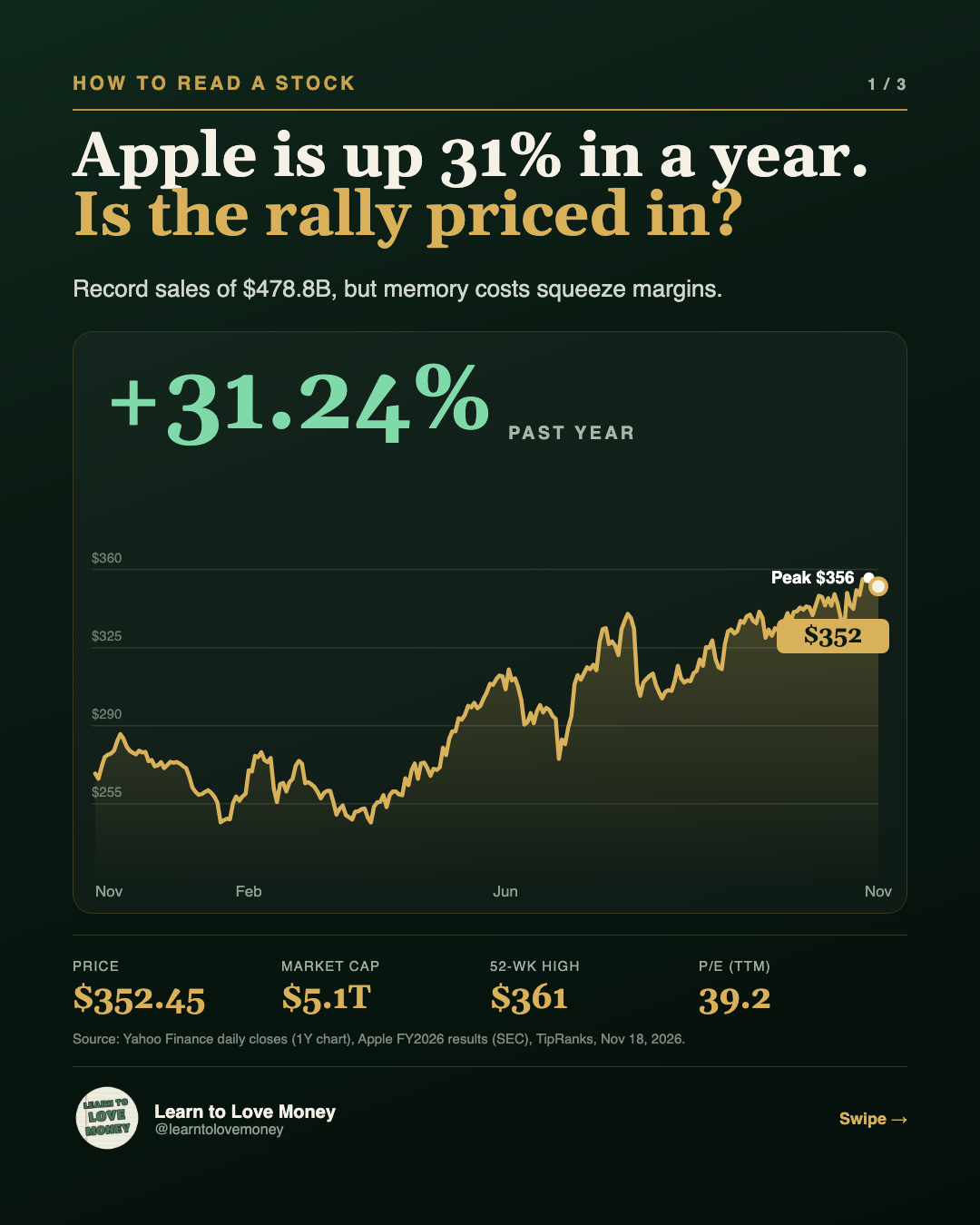
Apple is up 31% in a year and closed at a record $356.27 on November 13. Fiscal 2026 brought record sales of $479 billion, but the stock now trades near 39 times earnings, and memory costs are squeezing margins. Our AI leans Sell. Here's why, and what would prove it wrong.
What Apple actually does
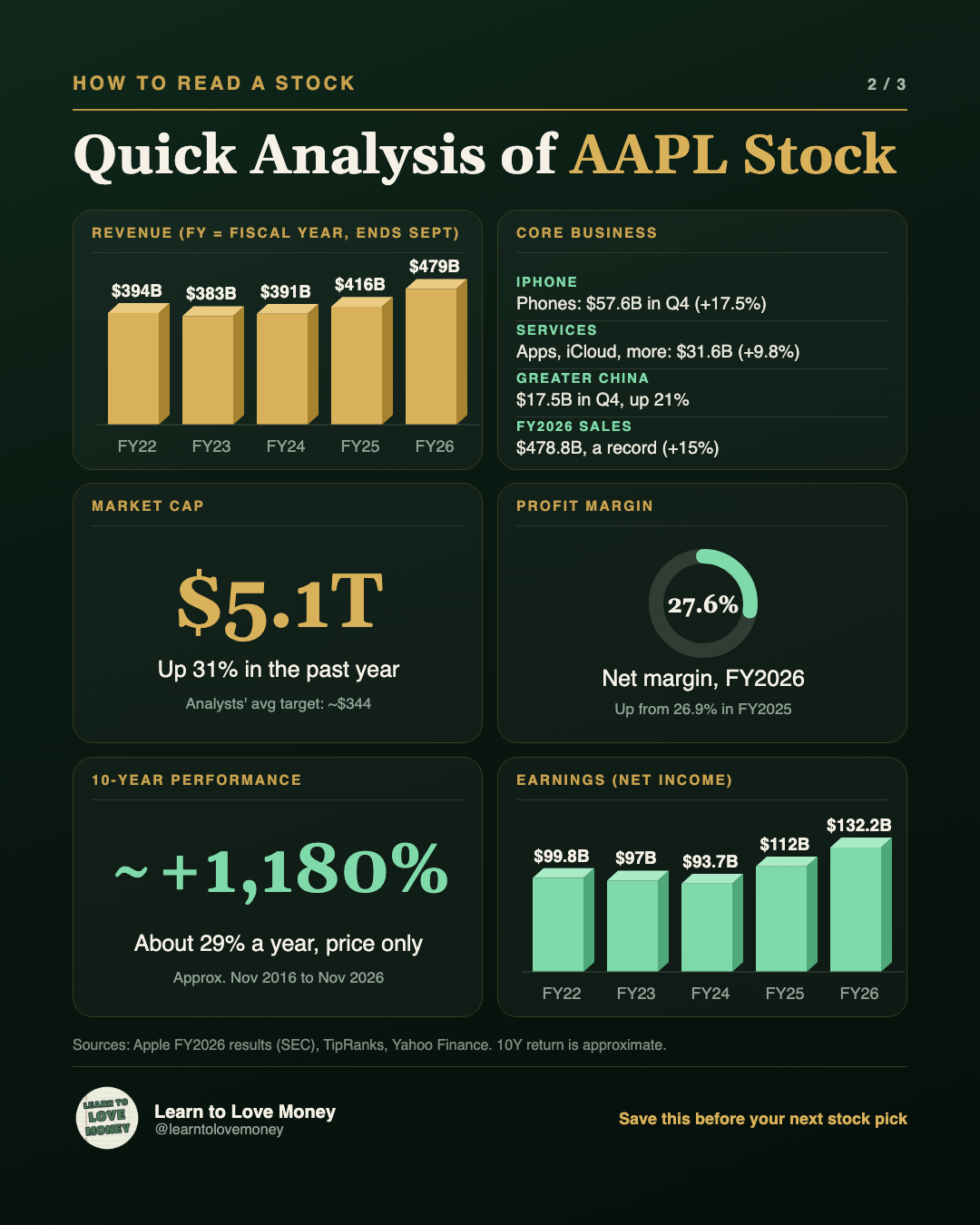
Apple sells iPhones, Macs, iPads, wearables, and a growing Services business. In the September quarter, total sales were $114.5 billion, up 12%. iPhone brought in $57.6 billion (up 17.5%), and Services brought in $31.6 billion (up 9.8%), an all-time high.
Mac grew 23.7% to $10.8 billion, while iPad (down 10.4%) and Wearables, Home and Accessories (down 7.9%) shrank. By region, Greater China grew 21% to $17.5 billion.
Growth: revenue and earnings
Apple's fiscal year ends in September. Revenue was stuck near $390 billion for three years, then grew to $416 billion in fiscal 2025 and $479 billion in fiscal 2026, up 15%.
Revenue ($B)
Profit grew even faster. Net income rose from $112 billion to $132 billion in fiscal 2026, a net margin of 27.6%, up from 26.9% the year before. One note: Apple's September-quarter gross margin of 47.9% included about one point from tariff refunds, a boost that may not repeat.
Net income ($B)
Is it actually cheap?
Price
$352.45
Market cap
$5.1T
52-week high
$361
P/E (TTM)
39.2
No. At $352 the stock trades at about 39 times the $8.98 Apple earned per share in fiscal 2026, and around 36 times next year's expected earnings by one estimate. For a company growing sales 12% to 15%, that is a full price.
Morningstar's fair value is $290, so the stock sits about 22% above it, and Morningstar rates it 2 stars. The average analyst target is about $344, slightly below today's price. Still, the stock is up about 1,180% over ten years, roughly 29% a year, price only (approximate).
Moat and leadership
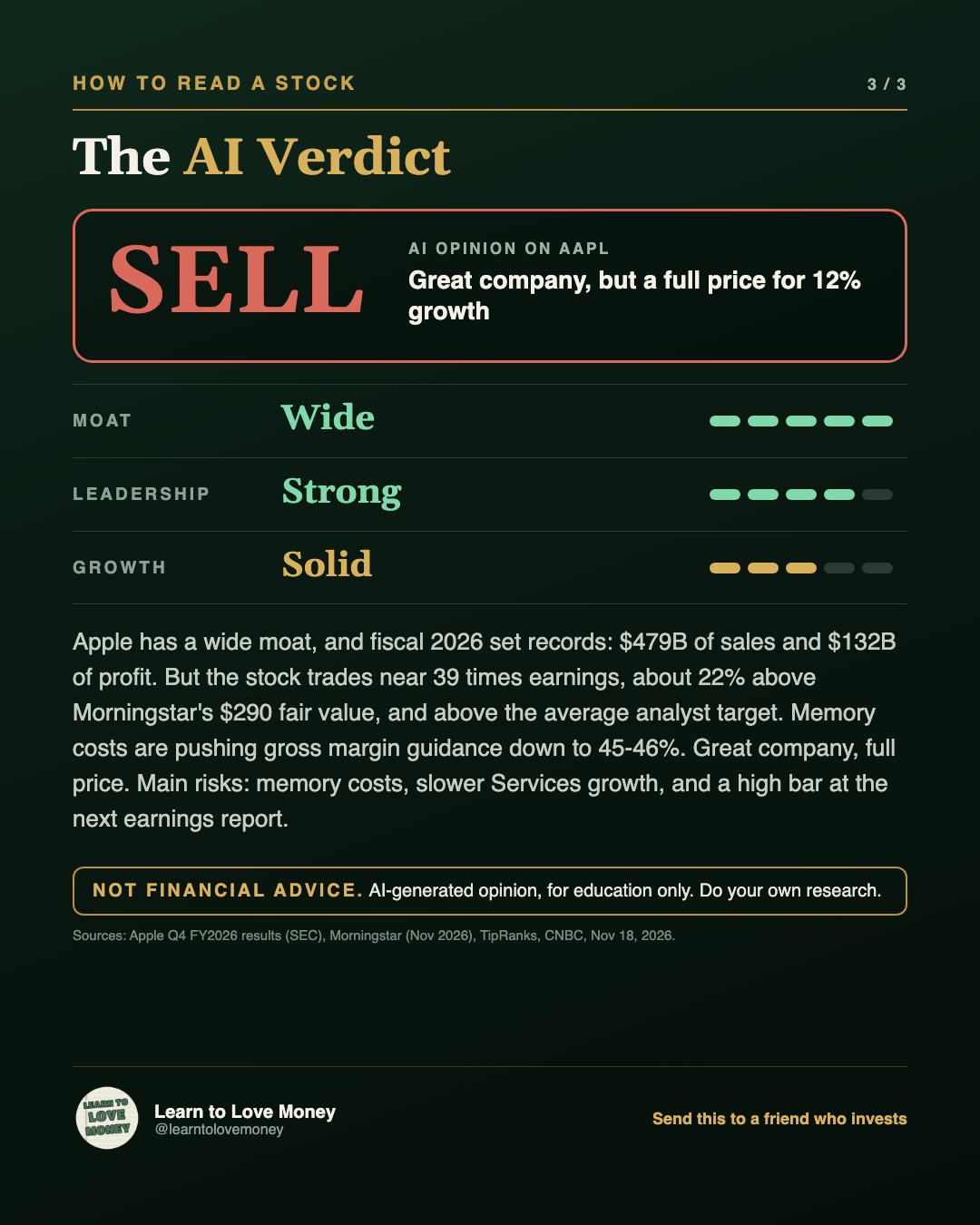
We rate the moat wide, matching Morningstar. Switching costs, the brand, and a network of billions of devices make Apple very hard to dislodge. Leadership is strong: Apple returned about $102 billion to shareholders in fiscal 2026 through buybacks and dividends and generated about $145 billion of operating cash flow.
The risk that flips the call
The biggest near-term risk is memory prices. Management called the rise in memory costs unprecedented, and Apple guided gross margin for the December quarter to 45% to 46%, below what analysts expected, according to CNBC. Services growth of under 10% and a high bar for the next earnings report add to the risk. The risk to our SELL lean is that demand for the newest iPhones stays strong and Apple passes costs on to customers, which would support today's price.
The AI verdict
AI lean
Great company, but a full price for 12% growth
SELL
Weighing moat (wide), leadership (strong), and growth (solid) against the price, our AI leans Sell. This is a high-quality business, but near 39 times earnings, above Morningstar's fair value and the average analyst target, with margins under pressure, it leaves little room for error. Analysts are split, so weigh both views.
More in this series: Meta, Alphabet, Amazon, and Micron. And for the AI side, our free AI Explained course covers what AI is and where it can go wrong.
NOT FINANCIAL ADVICE. This is an AI-generated opinion for education and entertainment only. It is not a recommendation to buy or sell any security. AI can be wrong, and data may be out of date. Do your own research or talk to a licensed advisor before investing.
Sources
- SEC EDGAR: Apple filings — Q4 FY2026 results and fiscal 2026 annual figures
- Yahoo Finance — daily closes, 52-week high, and 10-year price return
- TipRanks — market cap and average analyst target
- Morningstar — wide-moat rating and $290 fair value (Nov 2026)
- CNBC — reporting on memory costs and margin guidance